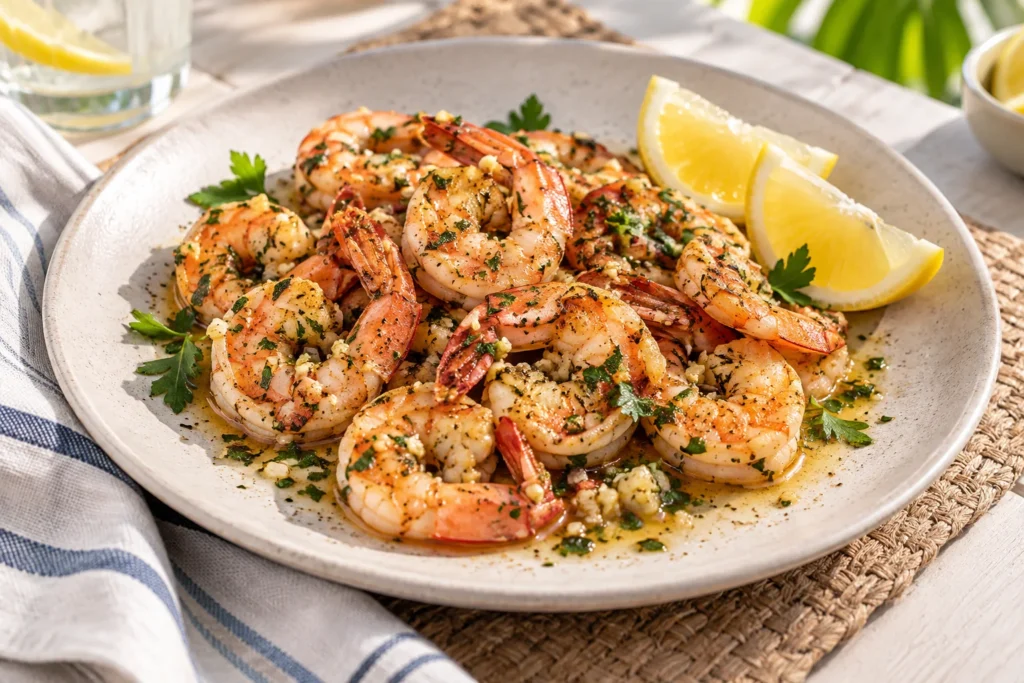
Jacksonville has a way of announcing summer before the calendar does. The air feels heavier, the afternoon storm arrives on its own schedule, and dinner needs to taste fresh without keeping the stove on for an hour. This citrus shrimp is the meal I make when the day has been hot, I want something generous, and I do not want a complicated plan.
The idea is simple: good shrimp, a very hot skillet, and citrus used in two different ways. Zest goes into the pan early enough to perfume the oil. Juice goes in at the end so it stays bright. Garlic, parsley and a little smoked paprika give the dish depth without covering the sweetness of the shrimp.
Choosing shrimp without overthinking it
I usually buy large peeled shrimp because they are practical on a weeknight. Fresh local shrimp are wonderful when available, but properly thawed frozen shrimp are often the more consistent choice. Look for shrimp that smell clean and mild. If frozen, thaw them overnight in the refrigerator or under cold running water, then dry them very well.
Drying matters more than most extra ingredients. Wet shrimp steam instead of sear. I spread them on a towel, blot the tops and leave them uncovered while I prepare the citrus. Removing the tails is optional. Tails look attractive, but a tail-free plate is easier to eat at the table.
The citrus balance
Lemon provides the sharp backbone, while orange rounds it out. Lime can work, but I use it carefully because it can push the dish in a different direction. The zest carries aromatic oils, so zest the fruit before squeezing it. Avoid the bitter white pith beneath the colored surface.
Do not marinate raw shrimp in citrus for a long time. Acid changes the texture and can make the outside chalky before the pan is hot. I season the shrimp with salt, pepper, paprika and zest, then add the juice only after cooking.
Citrus Garlic Shrimp
Ingredients
- 1½ pounds large shrimp, peeled and deveined
- 1 lemon
- 1 small orange
- 3 garlic cloves, finely chopped
- 2 tablespoons olive oil
- 2 tablespoons unsalted butter
- ½ teaspoon smoked paprika
- ½ teaspoon kosher salt, plus more to taste
- ¼ teaspoon black pepper
- ⅓ cup chopped flat-leaf parsley
- Pinch of red pepper flakes, optional
Method
- Dry the shrimp thoroughly. Zest the lemon and half the orange, then squeeze two tablespoons of lemon juice and three tablespoons of orange juice into a small bowl.
- Toss the shrimp with the zest, paprika, salt and pepper. Heat a wide skillet over medium-high heat until a drop of water evaporates immediately.
- Add the olive oil and half the shrimp in one layer. Cook for about ninety seconds per side. Transfer to a plate and repeat with the remaining shrimp.
- Reduce the heat to medium. Add the butter and garlic. Stir for thirty seconds, then pour in the citrus juice and scrape the flavorful browned bits from the pan.
- Return the shrimp and accumulated juices to the skillet. Toss for thirty to sixty seconds, just until coated and hot. Fold in parsley and pepper flakes. Taste and adjust the salt.
Why two batches are worth it
A crowded skillet loses heat quickly. The shrimp release water, the seasoning washes into the liquid, and everything turns pale. Two quick batches take only a few extra minutes and create the light browning that makes the finished sauce taste complete.
The exact cooking time depends on size. Watch for the shrimp to turn opaque and curl into a relaxed C. A tight O usually means they have gone too far. Pull them slightly early because they return to the warm sauce at the end.
What to serve with it
For a quick dinner, I spoon the shrimp over rice with cucumber or a simple green salad. Crusty bread is useful for the citrus butter. For a larger table, grilled corn, roasted potatoes or a bowl of white beans turn it into an easy spread.
The shrimp also work in warm tortillas with shredded cabbage. Keep the toppings restrained: avocado, a little yogurt or sour cream, and more herbs are enough. The point is to keep the clean citrus flavor visible.
Substitutions that make sense
If parsley is not available, cilantro changes the character but still works. Basil is excellent in late summer. Olive oil can replace the butter, although the sauce will be lighter. Scallops can use the same flavors, but they need their own cooking time and an especially dry surface.
For less heat, skip the red pepper flakes. For more, add sliced fresh chile at the garlic stage. I would not add bottled hot sauce until tasting; vinegar can compete with the citrus and make the sauce sharper than intended.
Storage and reheating
Refrigerate leftovers in a covered container for up to two days. Reheat gently in a skillet over low heat with a spoonful of water. A microwave works in short bursts, but full power quickly toughens shrimp.
Cold leftovers are also useful. Chop the shrimp and fold them into a salad with celery, cucumber and a little mayonnaise, or serve them over greens. The citrus remains lively the next day, which is one reason I make the full batch even when fewer people are at the table.
The small lesson behind the recipe
This dish is a reminder that fast cooking still benefits from order. Dry the shrimp, prepare the juice, chop the herbs and heat the pan before anything starts. Once the first shrimp hits the skillet, dinner moves quickly.
It is not a restaurant secret or a precious family formula. It is simply a dependable warm-weather meal built around good timing. On a humid Jacksonville evening, that is exactly what I want: bright food, one skillet, and enough sauce for the last piece of bread.
One final note: taste the finished sauce with the food you plan to serve. Rice softens salt and acidity, while bread makes the butter more prominent. If the plate seems flat, add a small pinch of salt before adding more lemon. If it seems sharp, a teaspoon of butter can round the edge. These tiny adjustments are more useful than treating the written quantities as unbreakable rules.