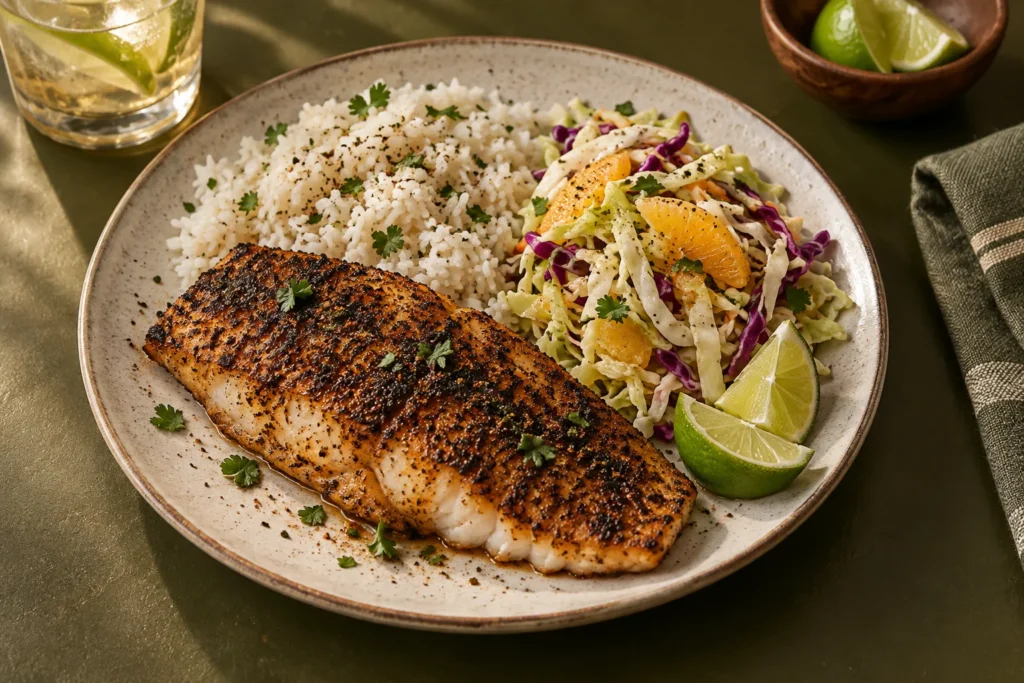
Blackened fish sounds like a project involving a restaurant hood, a blazing cast-iron pan and every smoke alarm in the house. It can be that. It can also be a sensible weeknight dinner if the heat, seasoning and fat are handled with a little restraint.
My version keeps the dark, savory crust but does not chase literal blackness. The goal is toasted spices and moist fish, not a burned coating. A quick citrus slaw and plain rice balance the spice and can be prepared before the skillet is hot.
Start with the right fillet
Firm white fish is easiest here. Grouper, snapper, mahi-mahi, cod and thick tilapia fillets can all work. Choose pieces of similar thickness so they finish together. If one end is thin, fold it underneath or remove that narrow section and cook it separately.
Pat the surface dry and check for bones. Cold fish placed directly into a pan tends to stick, so I let the seasoned fillets sit at room temperature for about ten minutes while making the slaw. Do not leave seafood out for an extended period.
A seasoning blend with control
Many commercial blackening blends are heavily salted. Mixing a small batch at home lets me control both salt and heat. Paprika builds color, thyme and oregano add a dry herbal note, and garlic and onion powder create the familiar savory base.
Cayenne is adjustable. A quarter teaspoon gives warmth without overwhelming the fish. The spice mixture should be pressed evenly onto the surface, not piled into a thick paste that falls off and burns.
Weeknight Blackened Fish with Citrus Slaw
Ingredients
- Four 5- to 6-ounce firm white fish fillets
- 1 teaspoon paprika
- ½ teaspoon garlic powder
- ½ teaspoon onion powder
- ½ teaspoon dried thyme
- ¼ teaspoon dried oregano
- ¼ teaspoon cayenne, optional
- ¾ teaspoon kosher salt
- 2 tablespoons neutral high-heat oil
- 4 cups finely sliced cabbage
- 1 orange, segmented or chopped
- 1 lime
- 2 tablespoons plain yogurt
- Cooked rice and cilantro for serving
Method
- Combine the paprika, garlic, onion, thyme, oregano, cayenne and salt. Dry the fish and season both sides evenly.
- Toss cabbage and orange with the lime zest, one tablespoon lime juice, yogurt and a pinch of salt. Set aside.
- Heat a heavy skillet over medium-high heat for two minutes. Add one tablespoon oil. Cook two fillets without moving them until the underside releases easily, about three minutes.
- Turn and cook two to four minutes more, depending on thickness. Transfer to a plate and repeat with the remaining oil and fish.
- Serve immediately with rice, slaw, cilantro and the remaining lime.
Heat management prevents the drama
Traditional blackening can use extremely high heat and butter solids that smoke aggressively. At home, medium-high heat and neutral oil are more forgiving. The spices still toast, and a properly preheated heavy pan produces a strong crust.
If the seasoning turns black in seconds, lower the heat. If the fish looks pale and sticks after several minutes, the pan was probably not hot enough or the surface was damp. A thin metal spatula makes turning easier.
How to know the fish is done
The flesh should turn opaque and separate into moist flakes under gentle pressure. An instant-read thermometer is useful when fillets are thick; 145°F is the standard safe endpoint for fish. I remove the pan from heat as the center approaches temperature because carryover heat continues the cooking.
Do not repeatedly flip the fillet. One confident turn protects the crust. If the fish breaks, serve the pieces honestly. Rice bowls are wonderfully forgiving, and flavor does not depend on an unbroken restaurant-shaped fillet.
The slaw is part of the recipe
The cool cabbage is not decorative. It supplies crunch, acidity and moisture alongside the spices. Orange echoes the Florida setting without making the plate sweet. Grapefruit can replace it, although its bitterness calls for a small spoonful of honey.
Make the slaw first, but not hours ahead. Salt eventually softens cabbage and draws water into the bowl. Twenty or thirty minutes gives the flavors time to meet while preserving texture.
Useful substitutions
Chicken cutlets can use the same seasoning, but must cook to their appropriate safe temperature. Tofu also works when pressed dry and sliced into firm slabs. For a dairy-free slaw, use olive oil and an extra squeeze of lime instead of yogurt.
If rice is not on the plan, serve the fish with roasted sweet potatoes, grits or warm tortillas. The leftovers make excellent tacos, especially with the remaining slaw.
Storage and the next-day lunch
Store fish and slaw separately for up to two days. Reheat fish gently in a covered skillet or eat it cold. Strong microwave heat tends to dry seafood and announce lunch to the entire building.
For the next day, flake the fish into a bowl with rice, cabbage and avocado. Add citrus only after reheating. It is a practical lunch, not an attempt to recreate the crisp crust.
A repeatable dinner, not a performance
The restaurant version of blackened fish is dramatic because restaurants have ventilation and cooks who repeat the move all night. A home version should respect the room it is made in. Moderate the heat, dry the fish and let the spices toast instead of burn.
The result still has the contrast that makes the dish satisfying: dark seasoning, tender fish, cool slaw and plain rice. Nothing requires specialty equipment, and the smoke alarm gets to remain a silent observer.
If you are cooking this method for the first time, use one fillet as a test. It reveals how quickly your pan transfers heat and whether the seasoning level suits you. Adjust before the remaining pieces go in. Home stoves, pans and fillet thicknesses vary too much for one exact minute count to be universally correct. Learning the signs—easy release, toasted aroma and an opaque center—makes the second dinner far easier than the first. Write down the fish, thickness and heat setting that worked so the useful lesson is still there next week.