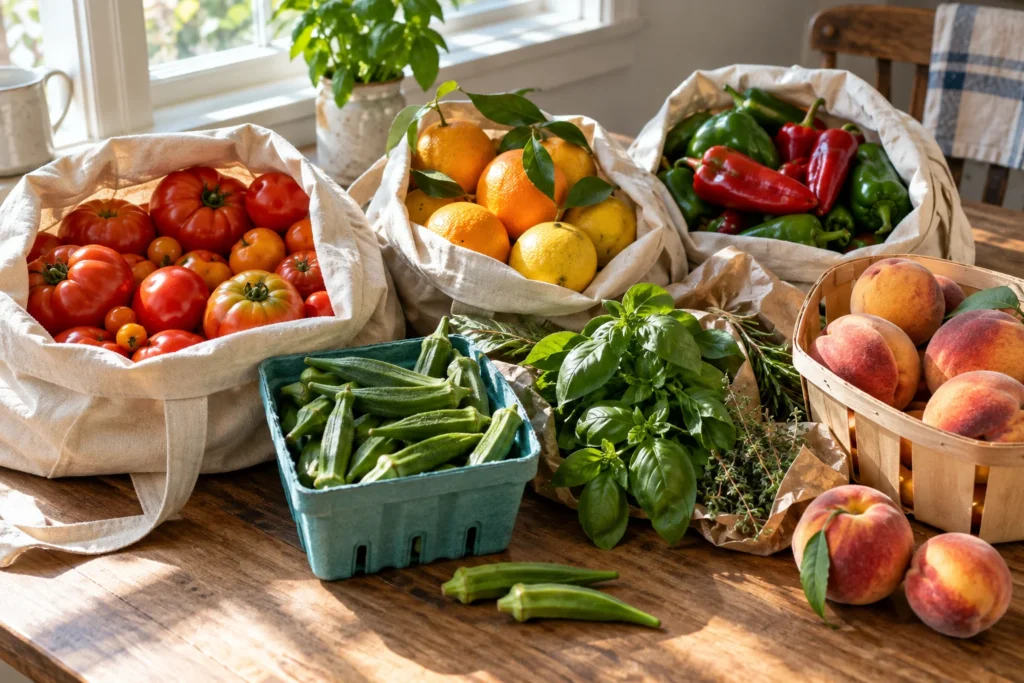
A farmers market can inspire two completely different versions of me. One walks slowly, asks sensible questions and buys what will become dinner. The other sees three kinds of tomatoes, fragrant basil and a basket of peaches and behaves as though twelve people are arriving for lunch. This note is about keeping the first person in charge.
I do not go with a rigid menu, but I do bring a loose framework: one fruit to eat raw, two vegetables that can share a cooking method, one sturdy green, herbs, and one ingredient that feels genuinely seasonal. That is enough variety without turning the refrigerator into a museum of good intentions.
First, I look rather than buy
Walking one complete loop prevents the first beautiful table from determining the whole basket. I notice which products appear repeatedly, compare ripeness and ask what was picked recently. Abundance is usually a clue to what is truly in season and priced sensibly.
I bring reusable bags and one shallow container for delicate fruit. A cooler in the car is useful during warm Jacksonville months, especially if the trip includes another stop. Produce loses quality quickly in a parked vehicle, and seafood or dairy should never wait in the heat.
Tomatoes earn their space
When tomatoes smell like tomato at the stem, I buy them in different stages of ripeness. The softest become lunch that day with salt, olive oil and bread. Firmer ones wait on the counter. Refrigeration can slow an overripe tomato, but I prefer room temperature for flavor whenever practical.
Cherry tomatoes are the dependable option. They roast well, hold up in grain salads and can become a fast pan sauce. I avoid buying a giant quantity solely because the display is beautiful. Four excellent tomatoes used completely are better than twelve neglected ones.
Okra needs a clear plan
Small, firm pods are more tender than oversized ones. I check that the tips snap rather than bend. At home, I keep okra dry and cook it within a few days. Moisture during storage encourages soft spots.
My easiest method is a very hot oven. Toss whole or halved pods with oil, salt and pepper, spread them widely and roast until blistered. High heat and space reduce the texture that makes some people suspicious of okra. Leftovers are good beside eggs.
Peppers create several meals
A mix of sweet and mildly hot peppers can move through the week. I slice some raw for lunches, char some under the broiler and dice the rest for beans or rice. The important step is labeling the hot ones. An unlabeled pepper in the crisper is a future practical joke.
Wrinkled peppers are not necessarily wasted. If they remain sound, roasting restores their usefulness. Truly soft or moldy areas are a different matter and should be discarded rather than trimmed casually.
Citrus is both ingredient and seasoning
Florida citrus changes with the season, so I buy what tastes and smells good rather than forcing a specific variety into the basket. Heavy fruit generally contains more juice. The peel should feel firm, though cosmetic marks are normal.
Before squeezing, I zest one or two fruits and freeze the zest in a small container. It can wake up rice, marinades or a pan of vegetables. Juice becomes dressing, while segments go into cabbage salad or breakfast yogurt.
Herbs need immediate attention
Basil, parsley, cilantro and mint make simple food feel deliberate, but they are also easy to lose in the back of the refrigerator. When I return home, I trim stems and place sturdy herbs in a jar with a little water. Basil usually stays on the counter; many other herbs prefer the refrigerator.
I choose one primary herb rather than buying every fragrant bunch. If basil is the week’s herb, it can serve tomatoes, grilled chicken and a pot of beans. Repetition is not boring when it prevents waste.
Peaches and other delicate fruit
I buy a few ripe pieces and a few firmer ones. Ripe fruit should smell fragrant and yield slightly without feeling bruised. It travels in the shallow container, not under a bag of corn.
The first peaches are eaten over the sink. Later ones go into oatmeal, salad or a quick skillet dessert. If they ripen all at once, sliced fruit can be frozen on a tray and transferred to a bag for smoothies.
A sample market basket
One practical haul
- Four tomatoes plus one pint cherry tomatoes
- One pound small okra
- Five mixed peppers
- Six pieces of citrus
- One bunch basil
- Four peaches
- One sturdy vegetable such as cabbage or eggplant
This is not a prescription. It is a quantity one household can reasonably move through while still leaving room for ordinary groceries.
How the basket becomes meals
On the first night, I make tomatoes and bread beside roasted okra. The next dinner uses charred peppers and citrus shrimp over rice. Cabbage becomes slaw for blackened fish, and basil moves into a bean salad. Peaches cover breakfasts and one dessert.
This kind of overlap is the real plan. Ingredients repeat, but the meals do not feel identical. A market purchase becomes useful when each item has at least two possible destinations.
Questions worth asking
I ask how a seller likes to cook an unfamiliar ingredient, whether something is ready to eat, and how it should be stored. Those questions invite practical answers. I do not need a lengthy origin story for every onion.
Market availability varies, and vendor details change. I avoid promising that a particular product will be waiting on a specific morning. The useful habit is learning the season and arriving curious.
The rule that saves the basket
Before buying, I finish the sentence: “I will probably use this in…” If no meal comes to mind, I either buy a small amount for experimentation or leave it for another week. Admiration does not require ownership.
A good market trip should make the next few meals easier, not create pressure. The basket can still contain one surprise. It simply needs enough structure that the surprise becomes dinner rather than compost.