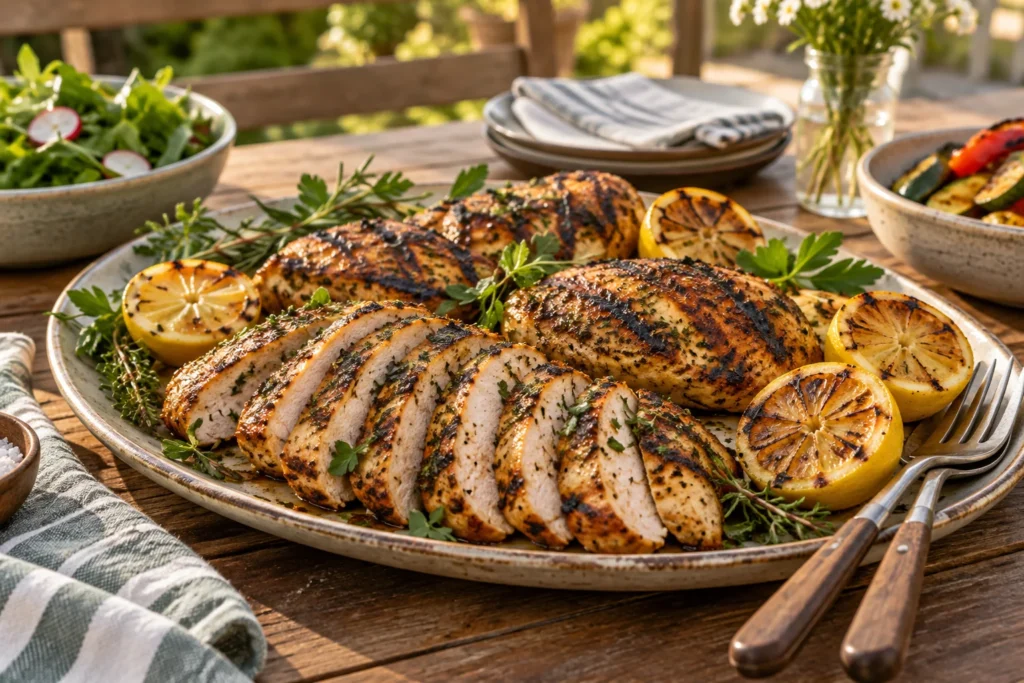
Saturday chicken is not slow because it requires constant work. It is slow because the useful parts happen in stages: seasoning in the morning, lighting the grill later, cooking without panic and letting the meat rest before anyone starts cutting. The actual hands-on time is modest.
This is the chicken I make when the afternoon is open enough to stay near the grill but I do not want a complicated barbecue project. Citrus brightens the meat, herbs bring the garden into the plan, and two heat zones provide control.
Choose pieces that forgive you
Bone-in thighs and split breasts are my usual combination. Thighs remain juicy through small timing mistakes, while breasts give lighter slices for people who prefer them. Keeping the skin on protects the meat and becomes crisp when the grill is managed well.
Uniform pieces are easier, but a mixed platter is more useful. The solution is not forcing everything to finish simultaneously. Start larger pieces first, move cooked pieces to a warm platter and rely on a thermometer rather than the clock.
The marinade has limits
Citrus juice adds flavor, but long acidic marination can make the surface texture soft. I use zest for aroma and a moderate amount of juice, then marinate for two to four hours. Overnight is unnecessary.
Oil carries the herbs and supports browning. Garlic, rosemary, parsley and thyme are dependable. Chop them finely enough to cling, but brush away large garlic pieces before grilling because they burn faster than the chicken cooks.
Citrus-Herb Grilled Chicken
Ingredients
- 4 pounds bone-in chicken pieces
- Zest of 1 lemon and 1 orange
- 3 tablespoons lemon juice
- 3 tablespoons orange juice
- ¼ cup olive oil
- 4 garlic cloves, chopped
- 2 tablespoons chopped parsley
- 1 tablespoon chopped rosemary
- 1 teaspoon thyme leaves
- 2 teaspoons kosher salt
- 1 teaspoon black pepper
- Extra lemon halves for grilling
Method
- Whisk zest, juices, oil, garlic, herbs, salt and pepper. Reserve three tablespoons before it touches raw chicken.
- Coat the chicken in the remaining marinade and refrigerate for two to four hours. Remove from the refrigerator thirty minutes before grilling.
- Prepare a grill with a hot direct zone and a medium indirect zone. Clean and oil the grates.
- Remove excess marinade. Place chicken skin-side down over direct heat for two to four minutes, watching for flare-ups. Turn briefly, then move to indirect heat.
- Cover and cook, turning occasionally, until breasts reach 165°F and thighs reach at least 165°F; many people prefer thighs closer to 175°F for tenderness.
- Grill lemon halves cut-side down. Rest chicken ten minutes, brush lightly with the reserved clean marinade and serve with grilled lemon.
Build two zones before the chicken arrives
On a charcoal grill, bank coals to one side. On gas, leave one burner lower or off after preheating. Direct heat creates color; indirect heat finishes the interior without turning the skin into charcoal.
If every inch is equally hot, there is nowhere to move during a flare-up. Fat dripping onto flame is normal. Keeping a calm zone turns it from an emergency into a simple relocation.
Do not grill a bowl of marinade
Lift each piece and let excess liquid fall away. Wet herbs and oil dripping into the fire encourage bitter smoke. The flavor has already reached the surface; more liquid is not more flavor.
Never use marinade that held raw chicken as a finishing sauce unless it is boiled safely. Reserving a clean portion at the beginning is easier and removes the question.
Temperature is more reliable than appearance
Beautiful grill marks do not confirm that meat is cooked. Insert an instant-read thermometer into the thickest area without touching bone. Check several pieces because grill temperature and chicken size vary.
Breast meat can dry quickly beyond its target. Thighs contain more connective tissue and often become better at a somewhat higher temperature. Remove each piece when ready instead of waiting for a ceremonial group finish.
Resting is part of cooking
Ten minutes on a platter allows heat and juices to settle. Cover loosely rather than sealing the chicken under foil, which softens crisp skin. Use the pause to grill vegetables or bring the rest of the meal outside.
I add the reserved marinade lightly after resting, then squeeze grilled lemon at the table. Grilled citrus tastes rounder and less sharply acidic than raw juice.
Side dishes that do not compete
A tomato salad, roasted or grilled corn, beans, slaw or a platter of cucumbers all fit. If the grill is already working, zucchini and peppers can cook over direct heat while the chicken rests.
Bread is welcome because the platter collects citrus and chicken juices. The meal should feel abundant without requiring four additional recipes.
Weather and food safety
Florida warmth shortens the time raw meat should spend outside. Keep chicken refrigerated until the grill is nearly ready, use a clean platter for cooked pieces and wash tools that touched raw meat.
If a storm interrupts, move the chicken to a 375°F oven and finish it there. Flexibility is better than standing over a metal grill in unsafe weather to defend the purity of the plan.
What to do with leftovers
Refrigerate cooked chicken within two hours and use it within three to four days. Remove meat from the bone for quicker cooling and easy lunches. Keep a little skin separate if you want to crisp it in a skillet.
Leftovers become sandwiches, rice bowls, chopped salad or chicken with white beans. The citrus-herb flavor is flexible and does not lock the meat into one cuisine.
Why this is a Saturday recipe
Nothing here is technically difficult. Saturday simply allows the process to breathe. There is time to season early, establish the fire and respond to the chicken rather than rushing it between other tasks.
The reward is a platter that feels celebratory without being fussy. The grill provides smoke, citrus keeps the flavors clear, and the leftovers quietly solve part of the coming week.